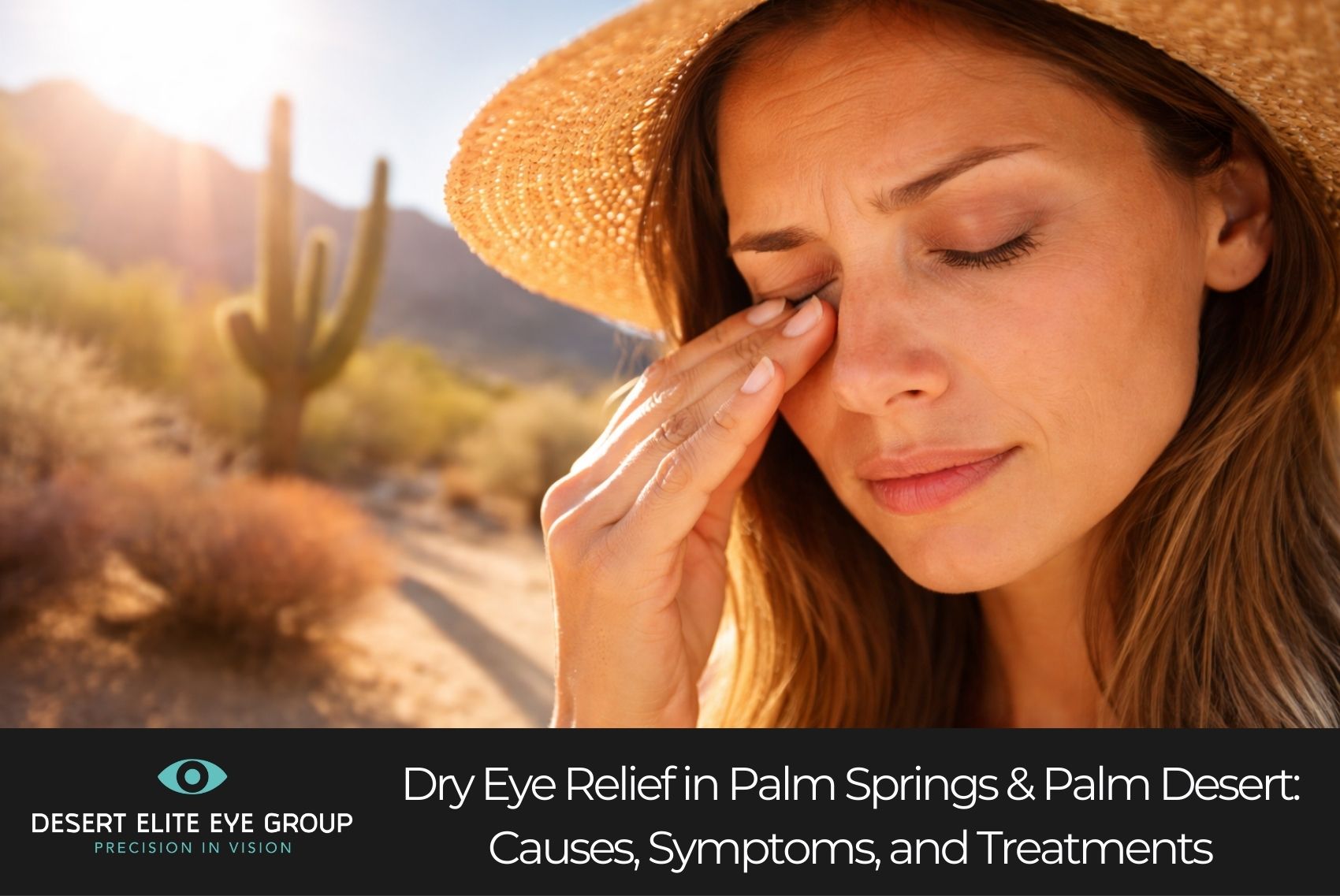
If your eyes often feel gritty, irritated, watery, or tired—especially after screen time or time outdoors—you may be dealing with dry eye disease, a very common but often underestimated condition. Dry eye can affect comfort, vision clarity, and even daily productivity.
At Desert Elite Eye Group, our experienced eye doctors help patients throughout Palm Springs and Palm Desert identify the cause of dry eye and find long-term relief through personalized treatment plans.
In this guide, we’ll explain what dry eye is, why it happens, and what treatment options can restore comfort and protect your eye health.
What Is Dry Eye?
Dry eye occurs when your eyes don’t produce enough tears, or when your tears evaporate too quickly. Tears aren’t just “water”—they are made of three important layers:
- Oil layer (lipid layer): prevents tears from evaporating too fast
- Water layer (aqueous layer): provides moisture and hydration
- Mucus layer (mucin layer): helps tears spread evenly across the eye
When one or more layers are out of balance, the surface of the eye becomes dry, inflamed, and irritated.
Dry eye may be occasional, but for many patients it becomes chronic—meaning it persists and may worsen without treatment.
Why Dry Eye Is So Common in the Desert
Living in the Coachella Valley can increase the risk of dry eye. Environmental factors like:
- Low humidity
- Desert winds
- Air conditioning
- Sun exposure
- Dust and allergens
can all speed up tear evaporation and worsen symptoms. Many people in Palm Springs and Palm Desert experience dry eye seasonally or year-round.
Signs and Symptoms of Dry Eye
Dry eye doesn’t always feel like “dryness.” Symptoms may include:
- Burning, stinging, or scratchy feeling
- Gritty sensation (like sand in the eyes)
- Redness or irritation
- Blurry vision that improves with blinking
- Excess tearing (watery eyes)
- Light sensitivity
- Eye fatigue
- Difficulty wearing contact lenses
- Feeling like your eyelids are heavy
- Discomfort after reading or screen use
If you notice these symptoms frequently, it’s important to schedule a comprehensive eye exam. Chronic dry eye can damage the surface of the eye over time.
Common Causes of Dry Eye
Dry eye can have more than one cause. At Desert Elite Eye Group, we look beyond symptoms to determine what’s actually driving the condition.
1) Meibomian Gland Dysfunction (MGD)
One of the most common causes of dry eye is MGD, where the oil glands in the eyelids become blocked or don’t function properly. Without enough oil, tears evaporate too quickly.
2) Aging
Tear production naturally decreases with age, especially after 50.
3) Screen Time and Reduced Blinking
When we stare at screens, we blink less often—leading to increased evaporation.
4) Contact Lens Use
Contacts can disrupt the tear film and contribute to dryness.
5) Hormonal Changes
Pregnancy, menopause, and other hormonal shifts can impact tear production.
6) Medications
Some medications can worsen dry eye, including:
- Antihistamines
- Decongestants
- Certain blood pressure medications
- Antidepressants
- Acne medications (like isotretinoin)
7) Autoimmune Conditions
Dry eye can be linked to conditions like Sjögren’s syndrome, rheumatoid arthritis, and lupus.
8) LASIK and Eye Surgery
Some patients develop dry eye after refractive surgery, though symptoms often improve over time.
Why Dry Eye Shouldn’t Be Ignored
Dry eye isn’t just uncomfortable—it can lead to complications if untreated, such as:
- Chronic inflammation
- Damage to the corneal surface
- Increased risk of infection
- Poor vision quality
- Difficulty driving at night or reading
Dry eye can also affect your quality of life, sleep, and ability to focus at work.
Dry Eye Treatment Options
The best dry eye treatment depends on the cause. Many patients need a combination approach.
Lifestyle & At-Home Relief
Your eye doctor may recommend:
- Warm compresses and lid hygiene
- Artificial tears (preservative-free options for frequent use)
- Omega-3 supplements (in select cases)
- Reducing fan/AC airflow toward your face
- Using a humidifier indoors
- Taking regular breaks from screens (20-20-20 rule)
Prescription Treatments
When inflammation is present, treatment may include:
- Prescription anti-inflammatory eye drops
- Tear-stimulating medications
- Allergy management when symptoms overlap
In-Office Dry Eye Therapy
For patients with moderate to severe dry eye, in-office care may be recommended, such as:
- Treatment for blocked meibomian glands
- Advanced dry eye evaluation
- Targeted therapies designed to improve tear quality and reduce evaporation
Your provider will discuss options based on your exam findings and comfort goals.
When to See an Eye Doctor for Dry Eye
You should schedule an appointment if:
- Dry eye symptoms persist more than a week or two
- Over-the-counter drops aren’t helping
- Your vision fluctuates
- You have redness, pain, or light sensitivity
- You suspect your medication or health condition is contributing
At Desert Elite Eye Group, we take dry eye seriously and focus on solutions—not just temporary relief.
Dry Eye Q&A (Comprehensive FAQ)
Q: What is the most common cause of dry eye?
A: For many patients, it’s meibomian gland dysfunction (MGD)—when oil glands in the eyelids don’t produce enough oil to keep tears from evaporating.
Q: Why do my eyes water if I have dry eye?
A: Excess tearing is often a reflex response. When the eyes become irritated and dry, the body produces watery tears to compensate—but these tears don’t have enough oil to stay on the eye and properly lubricate.
Q: Can dry eye cause blurry vision?
A: Yes. Dry eye can destabilize the tear film, causing fluctuating blurry vision, especially when reading, driving, or using screens.
Q: Is dry eye permanent?
A: Dry eye is often chronic, but it is very manageable. With the right diagnosis and treatment plan, many patients achieve significant long-term relief.
Q: Are artificial tears enough to treat dry eye?
A: Sometimes, but not always. Artificial tears can help symptoms, but if the root cause is inflammation or MGD, additional treatment may be necessary.
Q: What type of eye drops are best for dry eye?
A: Many patients benefit from preservative-free artificial tears, especially if using drops more than 4 times per day. Your eye doctor can recommend the best option for your eyes.
Q: Can allergies cause dry eye symptoms?
A: Yes. Allergies can worsen dryness and irritation. Some allergy medications can also reduce tear production, making dry eye worse.
Q: Does screen time make dry eye worse?
A: Absolutely. Screen use reduces blinking and increases tear evaporation. Frequent breaks and conscious blinking can help.
Q: Can dry eye damage my eyes?
A: In severe cases, yes. Untreated dry eye can damage the corneal surface and increase infection risk. That’s why proper treatment matters.
Q: What are the warning signs that dry eye is severe?
A: Signs include persistent pain, light sensitivity, frequent blurry vision, redness that doesn’t improve, or feeling like something is in the eye constantly.
Q: Can dry eye affect contact lens wear?
A: Yes. Dry eye can make contacts uncomfortable or reduce wearing time. Specialized contact lens options may help some patients.
Q: How do doctors diagnose dry eye?
A: Diagnosis may include evaluating tear quality, tear production, eyelid gland function, and ocular surface inflammation during a comprehensive exam.
Q: Is dry eye more common as you get older?
A: Yes. Tear production and gland function can decline with age, making dry eye more likely over time.
Q: What can I do daily to reduce dry eye symptoms?
A: Daily habits that help include:
- Warm compresses
- Staying hydrated
- Avoiding direct airflow from fans/AC
- Using preservative-free drops
- Taking screen breaks
Q: When should I book an appointment for dry eye?
A: If symptoms are frequent, worsening, or affecting daily life, it’s time to schedule a dry eye evaluation.
Get Help for Dry Eye in Palm Springs & Palm Desert
If dry eye is interfering with your comfort or vision, you don’t have to live with it. With today’s diagnostic tools and targeted treatments, most patients can experience noticeable improvement.
Desert Elite Eye Group proudly serves the Coachella Valley with advanced eye care and personalized solutions for dry eye.
Contact Information
Desert Elite Eye Group — Palm Springs
Phone: (760) 320-8497
Address: 1180 North Indian Canyon Drive, Suite 130, Palm Springs, CA 92262
Desert Elite Eye Group — Palm Desert
Phone: (760) 776-8600
Address: 45175 Panorama Drive, Suite B, Palm Desert, CA 92260
Website: deserteyedoc.com
Appointments: https://deserteyedoc.com/appointments/