Your eyes do more than help you see clearly—they provide insight into your overall health. Whether you’re experiencing blurry vision, headaches, dry eyes, or it’s simply time for your annual checkup, scheduling a complete eye exam is one of the best things you can do for both your vision and long-term wellness.
At Desert Elite Eye Group, our team proudly provides thorough, patient-focused eye care for individuals and families across the Coachella Valley. With convenient locations in Palm Springs and Palm Desert, we make it easy to stay on top of your eye health with modern diagnostic technology and personalized care.
In this guide, we’ll explain what a complete eye exam includes, why it matters, how often you should get one, and what you can expect when you visit Desert Elite Eye Group.
What Is a Complete Eye Exam?
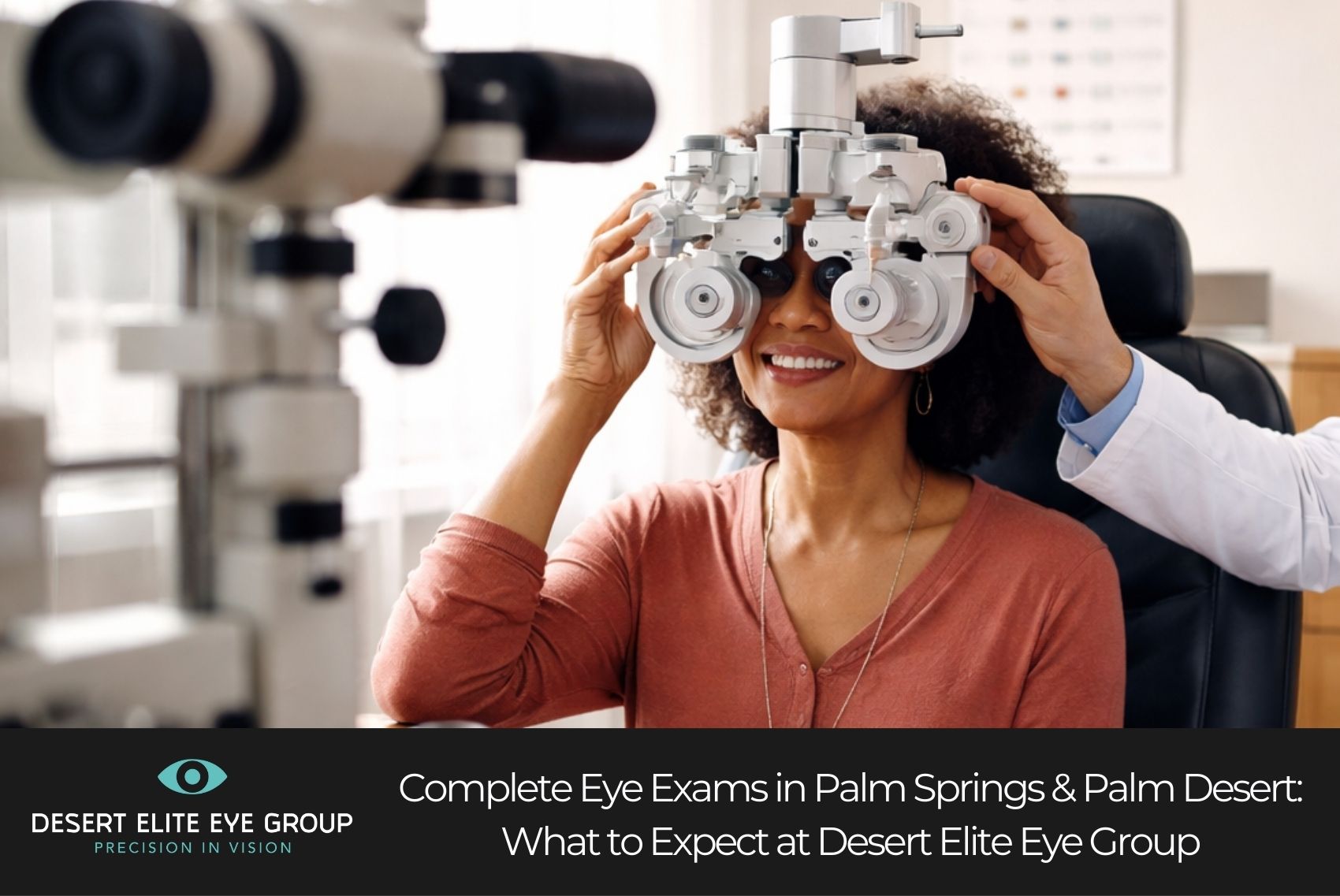
A complete eye exam is a comprehensive evaluation of your vision and the overall health of your eyes. It’s more than a simple vision screening. While vision screenings can detect obvious vision problems, a full eye exam is designed to:
- Check your prescription for glasses or contacts
- Evaluate eye muscle coordination and focusing ability
- Examine the internal and external structures of the eye
- Detect early signs of eye diseases (often before symptoms appear)
- Identify health conditions that may show up in the eyes, such as diabetes or high blood pressure
Complete eye exams are essential for maintaining clear sight and protecting your eyes from preventable vision loss.
Why Complete Eye Exams Matter (Even If You See Fine)
Many serious eye conditions develop slowly and painlessly. You may not notice anything is wrong until permanent damage has already occurred. That’s why routine eye exams are so important.
A complete eye exam can help detect or monitor conditions such as:
Common Vision Problems
- Nearsightedness (myopia)
- Farsightedness (hyperopia)
- Astigmatism
- Presbyopia (age-related near vision changes)
Eye Health Conditions
- Cataracts
- Glaucoma
- Macular degeneration
- Diabetic eye disease
- Dry eye syndrome
- Retinal tears or detachment
Even if your vision seems stable, eye exams help ensure your eyes remain healthy over time.
What Happens During a Complete Eye Exam?
At Desert Elite Eye Group, complete eye exams are thorough, comfortable, and tailored to your needs. While every patient is unique, here are common components included in a full exam:
1) Medical & Vision History
We begin by discussing:
- Your vision concerns or symptoms
- Past eye conditions or surgeries
- Current medications
- Family history of eye disease
- Overall health conditions (like diabetes or hypertension)
2) Visual Acuity Testing
This is the familiar “eye chart” test that measures how clearly you see at various distances.
3) Refraction (Prescription Check)
This determines your ideal prescription for:
- Glasses
- Contact lenses (if applicable)
4) Eye Muscle & Focusing Evaluation
We test how well your eyes work together, including:
- Tracking movement
- Depth perception
- Eye alignment
- Focusing ability
5) Eye Pressure Testing (Glaucoma Screening)
Eye pressure testing helps detect glaucoma risk. Early glaucoma often has no symptoms but can cause irreversible vision loss.
6) Pupil Response & Peripheral Vision Testing
These tests evaluate:
- How your pupils respond to light
- Your side (peripheral) vision
7) Examination of Eye Health
Your provider will examine the front and back of the eye to check for signs of:
- Inflammation
- Infection
- Cataracts
- Retinal disease
- Optic nerve changes
If dilation is needed, eye drops may be used to widen the pupils for a more complete internal exam.
How Often Should You Get a Complete Eye Exam?
While the right schedule depends on age, risk factors, and symptoms, general recommendations include:
- Children: At least once before starting school and regularly as recommended
- Adults (18–60): Every 1–2 years
- Adults (60+): Annually
- Patients with diabetes, glaucoma risk, or eye disease: As directed by your eye doctor (often yearly or more frequently)
If you’re experiencing sudden changes in vision, eye pain, flashes of light, floaters, redness, or discomfort—don’t wait for your next routine appointment.
Complete Eye Exams for Contact Lens Wearers
If you wear contact lenses, your complete eye exam may also include a contact lens evaluation, which helps ensure:
- Your lenses fit properly
- Your corneas remain healthy
- Your prescription remains accurate
- You’re using the right lens material for your lifestyle and dryness level
Improper lens fit can lead to discomfort, infection risk, and long-term complications—so routine contact lens checkups are especially important.
Eye Exams and Whole-Body Health: What Your Eyes Can Reveal
One of the most important benefits of complete eye exams is that they can reveal signs of systemic health issues, including:
- Diabetes
- High blood pressure
- High cholesterol
- Autoimmune disease
- Neurological concerns
In many cases, the eyes provide early clues that allow patients to seek medical care sooner—making routine eye exams a valuable part of preventive healthcare.
Why Choose Desert Elite Eye Group?
When you choose Desert Elite Eye Group for your complete eye exam, you can expect:
- Comprehensive, patient-first care
- Modern diagnostic testing and evaluation
- Attention to both vision and eye health
- Convenient locations in Palm Springs and Palm Desert
- A friendly, experienced team committed to long-term eye wellness
Whether you need a routine exam, updated glasses prescription, dry eye support, or monitoring for an eye condition, we’re here to help you see clearly and protect your vision for years to come.
Complete Eye Exams: Q&A
Q1: What’s the difference between a vision screening and a complete eye exam?
A vision screening is a quick check that may identify obvious vision issues. A complete eye exam is a detailed evaluation of both vision and eye health, including screenings for glaucoma, cataracts, retinal disease, and more.
Q2: How long does a complete eye exam take?
Most complete eye exams take 30 to 60 minutes, depending on whether dilation or additional testing is needed.
Q3: Do I need an eye exam if I have no symptoms?
Yes. Many eye diseases develop with no early symptoms, so routine exams are essential for early detection and prevention.
Q4: Will my eyes be dilated?
Dilation may be recommended depending on your age, symptoms, and health history. It allows a better view of the retina and optic nerve. If dilation is performed, your vision may be blurry and light-sensitive for a few hours afterward.
Q5: Can a complete eye exam detect glaucoma?
Yes. Eye pressure testing, optic nerve evaluation, and visual field assessment can help detect early glaucoma changes before noticeable vision loss occurs.
Q6: How often should I update my glasses prescription?
Most patients benefit from a prescription check every 1–2 years, or sooner if they notice changes in clarity, headaches, squinting, or eye strain.
Q7: What should I bring to my appointment?
Bring:
- Your current glasses or contacts
- A list of medications
- Any vision insurance information
- Sunglasses (especially if dilation is done)
Q8: Can kids get complete eye exams?
Absolutely. Eye exams help detect issues like lazy eye, focusing problems, and nearsightedness that can affect learning and development.
Q9: Is blurry vision always a prescription issue?
Not always. Blurry vision can be caused by dry eye, cataracts, retinal problems, diabetes-related changes, or other conditions. A complete exam helps identify the cause.
Q10: Can an eye exam detect diabetes?
An eye exam can’t diagnose diabetes, but it may detect signs of diabetic eye changes. Your eye doctor may recommend medical follow-up if concerning findings are present.
Q11: Do I need a separate exam for contact lenses?
Contact lens wearers often need a contact lens evaluation in addition to the standard exam to ensure the lenses fit safely and comfortably.
Q12: What symptoms mean I should schedule an eye exam right away?
Call promptly if you experience:
- Sudden vision loss
- Eye pain
- Flashes of light
- New floaters
- Severe redness or swelling
- Curtain-like shadow in vision
Schedule Your Complete Eye Exam Today
If it’s been a while since your last exam—or if you’re noticing changes in your vision—Desert Elite Eye Group is here to help with comprehensive eye exams in Palm Springs and Palm Desert.
Contact Information
Desert Elite Eye Group
Palm Springs
Phone: (760) 320-8497
Address: 1180 North Indian Canyon Drive, Suite 130, Palm Springs, CA 92262
Palm Desert
Phone: (760) 776-8600
Address: 45175 Panorama Drive, Suite B, Palm Desert, CA 92260
Website: deserteyedoc.com
Appointments: https://deserteyedoc.com/appointments/